
Spring 2026 Cellar Update
Myles' Cellar Update - 4/1/26:
The end of winter leading into the spring is always an interesting time of year in a wine cellar. After the intense period of the year that is harvest and the slow down around the holidays, early springtime is a combination of busy and slow days. It is simultaneously a good time to enjoy time away from the cellar and to give the little extra effort that will lay the groundwork for the summer to come.
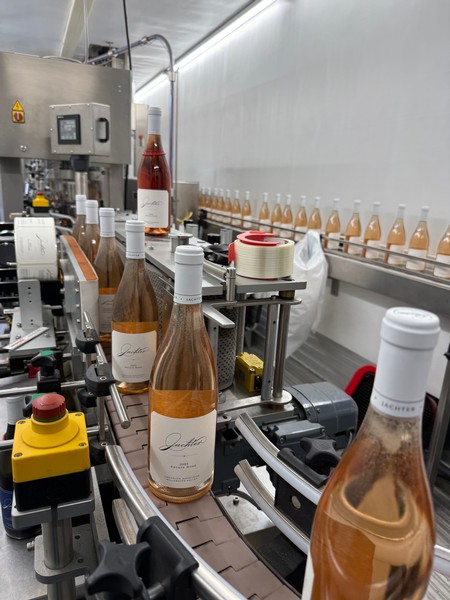
Over the last two months we have been preparing the 2025 Rosé of Pinot Noir and 2025 PopsanBro White Pinot for bottling. That process included watching them finish up fermentation, adding sulfur to protect them microbiologically and from oxygenation, cold stabilizing, heat stabilizing, and lightly filtering the wines. While each of these processes might sound intense or manipulative they are all quite simple and rather than detract from the final wine, help it to show its fullest potential.
Sulfur Dioxide or SO2, is the most commonly used preservative in wine and has been used since the 17th century. Here at Jachter Family Wines, we recognize the importance of its use but also are quite sensitive to its impact on the wines. Because of this, we use the minimum amount possible to achieve the style and quality wines that we strive to produce. At the end of fermentation, there is a high degree of microbiological activity that has just happened so in order to finish a wine at its optimal place, we will use the necessary dose of SO2 to terminate the function of the microbes and cease any further fermentation. In addition to ceasing fermentation SO2 also then has the added benefit of helping to prevent oxidation that would occur to the wine once the yeast cells are no longer active.
Cold stabilization is the process by which surplus Potassium Bitartrate crystals are precipitated out of the wine. In other words, when the wine becomes very cold, the amount of Tartaric Acid in a wine can become unstable and crystallize with Potassium Ions. These crystals fall out of solution and can be seen at the bottom of a bottle of unstabilized wine. Luckily, the process of cold stabilization is a straightforward one–we hold the wine cold (below 32F) for around ten days until it measures as cold stable. Then the wine is racked off the sediment that could otherwise have found its way into your bottle.
Heat stabilization is the process of fining out surplus proteins in a wine that could cause haziness if a wine was left in a hot environment. This is also a straightforward process that begins with bench top trials in the laboratory. We take small samples of each wine and treat them with small dosage rates of Bentonite, heat them in a water bath, then allow them to cool on the lab bench top to determine the addition appropriate rate based on where the haziness has formed.
Bentonite is a naturally occurring mineral clay. Its physical structure looks like small overlapping sheets and its function in the wine is based on the positive and negative charge of particles in the wine. Because of the physical nature of the Bentonite, there is very little interaction between it and anything other than the protein particles that we want to remove. Basically the Bentonite is added to the wine and the small sheets act like magnets to protein particles and create small boxes around them. Once the boxes are formed the Bentonite (and protein inside the box) falls out of solution and creates a sediment at the bottom of the tank. The fined wine is then racked off the sediment and the wine is heat stabilized.
The final step before these wines are ready to bottle is a light filtration. Since we have cold and heat stabilized the wines we want to ensure that all of the sediments produced are left behind. To do this we run the wine through a very gentle polishing filter that will make sure the wines are perfectly clear and ready to be enjoyed!
Through all these steps it might seem like a lot has to happen for bottling preparation, and it kind of does! But because of the style of wines we are producing and the quality therein all these processes are as minimally invasive as possible and are not additives or leave any residues in the final wine.
In addition to all the action with the 2025 Rose of Pinot Noir and 2025 PopsanBro White Pinot we have also been preparing the 2025 Blanc de Blancs for tirage bottling. Tirage bottling is a different set of processes. The wine has not seen any SO2 in the cellar, even after fermentation has been completed. The wine has been cold stabilized but not heat stabilized and will be lightly filtered before bottling. Since we are making this wine in the Traditional Champagne Method, the wine will have sugar and a prepared yeast culture added to it before bottling under crown cap so that yeast will ferment in the closed environment of the bottle and produce carbonation. After a few weeks of allowing the yeast to fully ferment the sugars in bottle, the wines will remain enclosed with the yeast in bottle for their period of "en Tirage” aging. Different appellations require different time periods of “en Tirage” aging, in Champagne 15 months is the minimum, for Method Oregon 24 months is the minimum, and our goal is 48-60 months minimum.
While all the action is happening with these three wines, the rest of the cellar is relatively quiet! The 2025 red wines have all finished fermentation and are quietly aging in their barrels. We will begin blending trials in the summer to determine the 2025 wines and what their final blends will be. The 2025 Chardonnays are mostly finished with fermentation, although there are a few slower moving barrels that are still working through the last amounts of sugar and/or Malic acid. These wines will be over-vintaged in barrels so they still have plenty of time before we begin blending trials in November.
Cheers,
Myles
Have any winemaking questions for Myles? Feel free to connect with him directly via email at myles@jachterwine.com
 Apr 2, 2026 at 12:00 PM
 Permalink
 Be the first to comment on this post
Tractor Tails: Spring Edition

Aaron's Vineyard Update - 4/1/26:
Spring Is Jumping the Gun in the Vineyard!
If you’ve spent any time around farming, you know nature doesn’t always check the calendar. This year, she seems to have flipped ahead a couple of pages without telling anyone. We’re officially into early spring activity in the vineyard—and by “early,” I mean about two weeks ahead of schedule.
Bud Break Is Off to the Races...
The Nebbiolo and parts of the Chardonnay blocks have already hit bud break, which is always one of those moments that feels equal parts exciting and mildly nerve-wracking. It’s the vineyard’s version of stretching after a long nap—everything waking up, full of potential… and completely exposed to whatever spring decides to throw next.
Meanwhile, Pinot Noir is still taking its time, sitting comfortably in the wooly bud phase like it’s not quite ready to commit. Classic Pinot behavior—never in a rush, always on its own schedule.
Sheep: The Unsung Vineyard Crew
Before we get too far into tractor season, it’s worth tipping our hats to the real MVPs of late winter: the sheep.
They’ve done exactly what we asked—trimmed down the grass and cover crop with remarkable precision, all while contributing a little “natural fertilizer” along the way. Efficient, sustainable, and significantly less complaining than most crews. Hard to argue with that kind of work ethic.
With their job complete, under-vine cultivation has now begun. In other words, it’s time for us humans to step back in and clean up what the sheep politely left behind.
A Little Early, A Little Different
Bud break coming early puts a slightly different tone on the season. It’s not necessarily a bad thing—but it does mean we’ll be keeping a closer eye on weather patterns, especially those spring cold snaps that like to show up uninvited.
Farming keeps you humble like that. Just when you think you’ve got the timing figured out, the vineyard reminds you who’s really in charge.
Changes in the Blocks
This season also brings some meaningful changes in the vineyard layout.
We’re grafting over two blocks of Chardonnay:
- One will transition to Wädenswil (a clone that should bring some exciting structure and character)
- The other is making a more dramatic shift—moving from Chardonnay to Coury Pinot Noir
Yes, you read that right. Chardonnay making way for Pinot. If vines could talk, this would probably qualify as a major identity shift.
Dirt Work and the Lower Vineyard
In addition to what’s happening above ground, we’re continuing development in the lower vineyard. April will be dedicated largely to dirt work—moving soil, refining layout, and setting the stage for future plantings.
It’s not the glamorous side of vineyard life, but it’s the kind of work that quietly determines how everything else performs down the line.
Looking Ahead
So here we are: early bud break, sheep off duty, tractors warming up, and a few blocks getting a complete makeover.
Spring doesn’t ease into things—it kicks the door open and gets moving. And this year, it showed up early and didn’t bother to knock.
We’ll keep you posted as the season unfolds. For now, we’re keeping one eye on the vines and the other on the weather…
Cheers from your friendly farmer,
Aaron
Have any vineyard or farming questions for Aaron? Feel free to connect with him directly via email at ajachter@jachterwine.com
End of Year Sentiments
Myles' Update 12/18/2025:
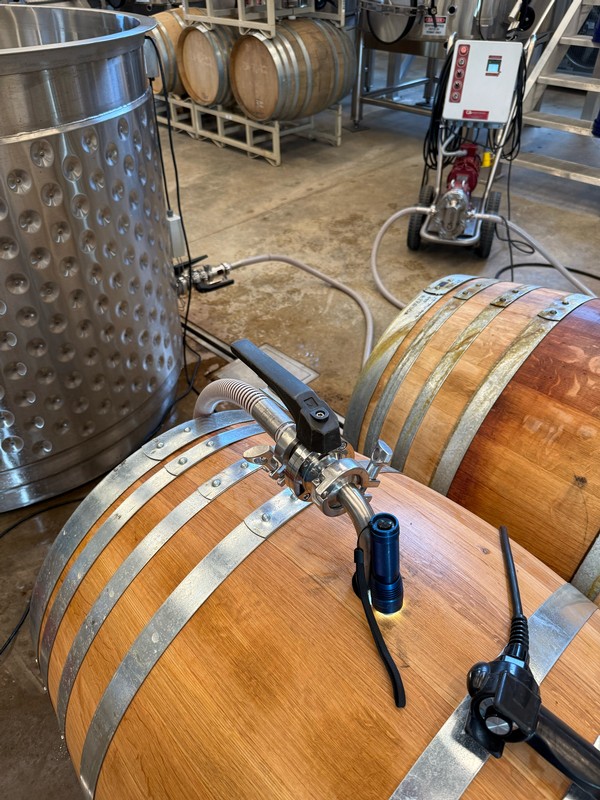
Since the end of harvest we have been watching all the wines slowly develop and begin to reveal more of what will be their final characteristics. We are still very early in the life spans of all the wines but they are already beginning to show incredible promise.
The Pinot Noirs are all finished with malolactic fermentation which happened spontaneously and rapidly in every lot. Some years wines have difficult times completing malolactic fermentation and some years it goes quite easily!
All the Chardonnays are still moving slowly along. Several lots are nearly finished with alcoholic fermentation and others are not quite finished yet. With the completion of alcoholic fermentation they too will begin malolactic fermentation which should continue well into the spring.
The Nebbiolo finished primary fermentation on skins and was transferred to barrel in November. It has since been quietly aging and we expect malolactic fermentation to commence this month.
With nearly all of the wines either finished or in slow progress this is the season in a winery when you really get to practice patience. All the wines are beginning to show inklings of their final character but with several months (or years) to go there is still a lot of evolution and maturation that will occur.
When we return from the holiday break, we will begin preparing for our spring bottling. At that time we will bottle the 2025 Rosé of Pinot Noir and the 2025 PopsanBro White Pinot Noir. The Rose is always our first release of a vintage and can be expected sometime in the late spring/early summer!
Outside the cellar there are some exciting developments happening in the vineyard! This fall as a team we planted our ‘Petting Zoo Vineyard’ which contains a mix of several Pinot Noir and Chardonnay clones. Just below the pergolas, this vineyard was planted with a few intentions in mind. It will be the vineyard that Aaron will continue his vine-to-glass vineyard series in; enabling the hands on series to start from the very beginning of planting a vineyard and carrying on throughout several growing seasons. It will also be a trial area for us to experiment with new and rarer clonal selections to see how they behave on this vineyard site. We are very excited about it for both reasons!
In addition to this new small block we will be grafting a few blocks to new clonal material and planting new vineyard blocks down by the winery. Both projects will continue through the summer and fall so more on those later!
Cheers,
Myles
Wrapped - Harvest 2025!
Myles' Last Harvest Update - 10/21/25:
“That’s a wrap!
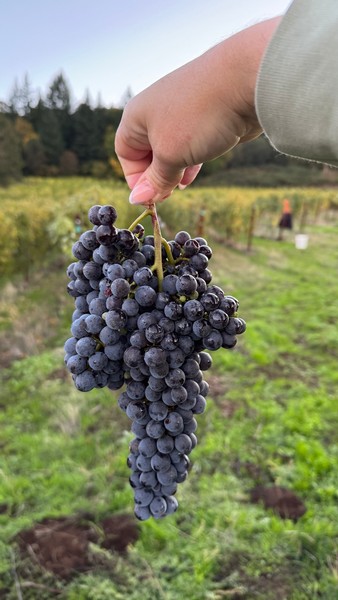
On October 14th, our final fruit was ready to be picked, so we gathered up the team for one final pick day and brought in the Nebbiolo. The sunny and cool days in early October helped to bring the Nebbiolo into a beautiful stage of ripeness where it is already expressing fruity and floral notes with a vibrant acidity to match. We will ferment the Nebbiolo over the course of the next few weeks, and then it will age in barrel for nearly two years!
While we awaited the Nebbiolo to be ready we have finished transferring all the Pinot Noirs to barrel, where they will soon begin Malolactic Fermentation and age until they are ready to be blended and bottled.
The Chardonnays have been slowly working through primary fermentation and are continuing to do so! Since all the Chardonnay is fermented spontaneously and held at cooler temperatures, the fermentation takes months to complete. This long process adds layers of complexity to the wines and allows for their truest self-expression.
With the final fruit in the cellar, we have been doing our final deep clean on all our crush equipment in preparation of putting it away until Harvest 2026! Over the next few months, we will continue to watch all the wines from this vintage and prepare them for bottling as the appropriate timing dictates.
Harvest is a wonderful time of the year; filled with excitement, anticipation, and plenty of hard work. We had an amazing crew this year who have all played a critical role in helping to produce the wonderful wines to come. We had incredible people helping us who, by sorting fruit and cleaning equipment, made a notable positive impact this harvest. Thank you to you all!”
Cheers to a successful 2025 vintage!
Myles
Last Fruit Standing
Myles' Cellar Update - 9/23/25 - 10/1/25:
"In mid-September, after a brief weather-driven slowdown in ripening of the Pinot Noir, the vines brought the fruit right into the perfect zone of ripeness. We’ve harvested the remaining Pinot Noir off the property, the Pinot Meunier, and the Popsanbro (White Pinot) fruit. Just like the Chardonnay, all the different blocks of Pinot Noir are kept separate throughout fermentation and barrel aging, allowing us to continue learning about the vineyard and have as many options as possible during assemblage. Now the focus shifts firmly into the cellar, where we will continue to manage the fermentations and barrel down the wines as they finish up!
We celebrated the ‘Last Fruit’ with a single pick from Block 5 Wädenswil, which, due to its small tonnage crop, we have treated in a special way, more to come on that later. The only remaining fruit on the property is the Nebbiolo. We have been watching the block, allowing it to continue hanging and ripening. Due to its much later ripening nature, looser clusters, and thicker skins, we are able to allow the vines to continue ripening the fruit through more inclement weather than Pinot Noir would typically allow. We are still anticipating our final pick of the season to be ready in the earlier part of this month.
Our sparkling base wine, which was the first to be harvested, has completed alcoholic fermentation and is now topped up in barrel, awaiting tirage bottling in May. It still has a long journey ahead of it before it will be released, but it is showing the beginning structure for a beautiful and serious sparkling Blanc de Blancs.
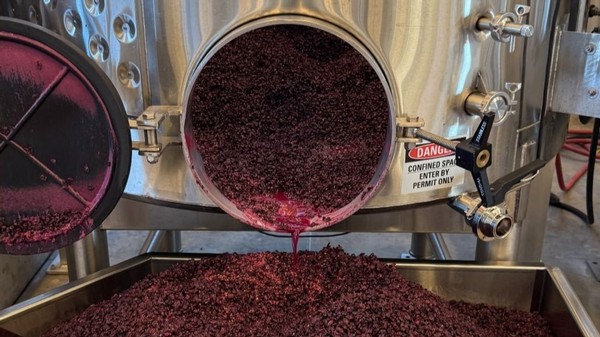
This week, the Pinot Noirs are finishing primary fermentation, we have begun draining the wine off the skins, gently pressing the skins, and transferring it all to barrel! Just like with the Chardonnay, we are keeping everything meticulously separate throughout draining, pressing, and barreling down. As the wines are heading to barrel, we are getting our first glimpse at what qualities the final wines of 2025 will have, and boy, are we excited!!"
Cheers!
Myles
Chardonnay & Pinot Noir Have Arrived!
Myles' Cellar Update 9/9/2025:
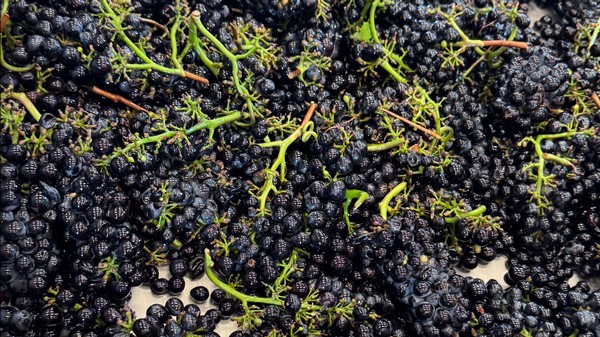
With the last week of August providing warm days and cool nights, our Estate Chardonnay came into just the right amount of ripeness the first week of September, arriving in beautiful condition with a lovely showing of aromatic precursors for the finished wine and as quickly as we began, we finished harvesting our Chardonnay, last week!
Our Chardonnay plantings on the Estate are split into many smaller blocks, which enables us to pick each Chardonnay block separately. By picking each block separately, we can target the optimal level of ripeness for each section and keep them as separate as possible through fermentation and aging, so that we can continue to learn how our vineyard grows Chardonnay and the many differences between all of the blocks. In addition to the learning process along the way, keeping the Chardonnays separate gives us the maximum number of blending options when we begin assemblage of the final wines.
Our Pinot Noir pick also started the first week of September! First up, we brought in four tons of Dijon Clone 667 and 777 from the Flanerie Vineyard in the Ribbon Ridge AVA that will become its own blend. We also picked two of the quickest to ripen Pinot Noir blocks from the Estate and have captured an exciting moment of ripeness where they are showing impressive intensity and liveliness at the same time. After several spells of warm and dry weather through August into early September, we finally got a rain event and a cool down, so we did not harvest any Pinot Noir last week. The vines took this as a chance to pause, catch their breath, and then carry on with ripening their fruit. This week, we picked the majority of our Estate's Pinot Noir fruit, with the final pick scheduled for this coming Monday, the 22nd.
Throughout harvest so far, the team has found a fun and sometimes goofy cohesiveness. I have noticed wonderful camaraderie and a willingness to lend a hand whenever is necessary. As much as harvest is about the fruit and making wine, the people who make the wine are incredibly important. Having a lively crew who is having fun with the process makes it better for us all and makes better wine!
Cheers!
Myles
2025 Harvest Begins!
8/31/2025 - The past week in the cellar:
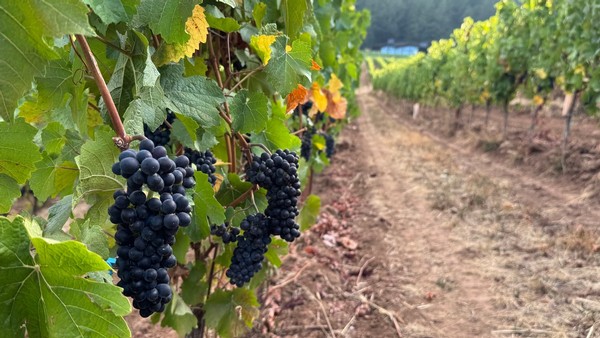
Harvest has begun! Last week, we started with sparkling base wine picks from our Estate's Chardonnay Blocks 13 and 4. The fruit was in beautiful condition and tasted wonderful! Our sparkling base was whole cluster pressed with minimal skin contact and sent off to neutral barrels to ferment.
We also picked our still Rosé of Pinot Noir last week from Block 7, which is all Pommard clone. It was also in wonderful condition and tasted to have the precursors for delicious fruity and floral notes in the final wine! It has been whole cluster pressed to tank where it is undergoing fermentation in mostly stainless steel tanks.
Along with processing those grapes we have been cleaning and preparing all week for more picking which began today with the first of our still Chardonnay fruit. Surveying the vineyard for optimal ripeness for our Chardonnay, Pinot Noir, and Nebbiolo will be a major focus in the days (and weeks) to come!
Cheers!
Myles
You know you want to
Join Our Mailing List
Stay connected with new wine releases, events, and more!